
Black Vulture
The most numerous species of vulture in the Western Hemisphere!
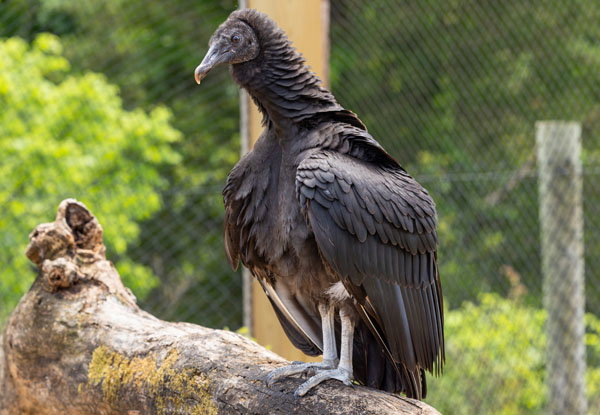
Day of Creation: five
Biblical Kind: New world vulture
Status: least concern
Wingspan: 4–5 feet (1.3–1.7 meters)
Weight: 3–6 pounds (2.6–3 kilograms)
Habitat: open areas with scattered trees, lowland forests, shrublands, pastures, wetlands, and urban areas
Lifespan: 10–25 years
Diet: carrion feeders, consuming dead animals, but they may also eat eggs and small mammals
Family Life: monogamous, mating for life
Reproduction: Females lay two eggs, incubated by both parents for 38–45 days. Chicks are fed regurgitated food and fledge at 10–14 weeks, remaining dependent on parents for up to eight months.
When God created the world, everything was perfect (Genesis 1). There was no suffering, sickness, carnivory, pain, or death. When man sinned against God (Genesis 3), the world was cursed by God. The need for scavengers, like the black vulture, arose as the results of sin and death entered the world. Black vultures serve as an important cleanup crew by removing decaying animals that can harbor diseases in a fallen world. One day, creation will be healed and restored to its perfect condition, and the curse will be removed from the universe (Isaiah 11:6–8).
Fun Facts
They will regurgitate partially digested food when startled to discourage their predators.
Groups of black vultures have different names. When resting, they are a committee; when flying, they are a kettle; when feeding, they are a wake.
They are commonly called “buzzards,” but true buzzards are actually a type of hawk.
Black vultures lack a syrinx, so they produce only grunts or hisses.
Black vultures are the most numerous vulture in the Western Hemisphere, despite being outnumbered by turkey vultures in the US.
Bigger Than Imagination




Ark Encounter Location
place
1 Ark Encounter Drive
Williamstown, KY 41097 (see directions)
Just west of the intersection of KY-36 and I-75 (at exit 154).
An attraction of Answers in Genesis
2026 Answers in Genesis. All rights reserved. | Privacy Policy | Content Policy | Attraction Rules