Tiger Rat Snake
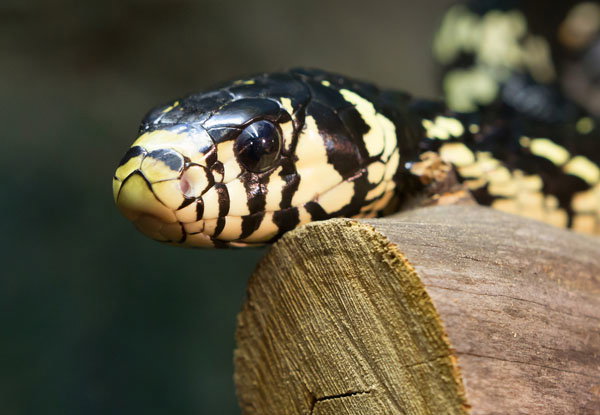
The tiger rat snake—also known as the “chicken snake” or “lightning and thunder snake”—is a nonvenomous species native to Central and South America.
Day of Creation: six
Biblical Kind: king snake (colubrid)
Status: least concern
Length: 6–8 feet (1.8–2.4 meters)
Weight: 2–5 pounds (0.9–2.3 kilograms)
Habitat: rainforest edges, open woodlands, brushy grasslands, thorn scrub, and similar habitats of Central and South America
Lifespan: up to 15 years
Diet: rodents, bats, birds, eggs, lizards, and amphibians
Family Life: solitary
Reproduction: 8–14 eggs can be laid, and within 73–76 days, the offspring emerge
Tiger rat snakes rely on hunting strategies like swift movement and a strong bite to capture a variety of prey. To ward off would-be predators, they employ defensive techniques such as puffing up their heads and vibrating their tails. As they are presently, these defense/attack structures (DAS) were not part of God’s original, flawless world (Genesis 1:31). When God created the universe, everything was perfect (Genesis 1), with no suffering, sickness, carnivory, pain, or death. However, when man sinned (Genesis 3), the world was cursed. The need for DAS that are currently present in animals arose once carnivory and the other consequences of sin entered the world. One day, creation will be healed and restored to its unblemished condition, and the curse will be removed from the universe (Isaiah 11:6–8).
Fun Facts
Unlike other snakes that eat infrequent large meals, tiger rat snakes eat very frequent smaller meals, and meals that are too large can be fatal for them.
These snakes are also commonly referred to as chicken snakes in their native range due to their habit of raiding chicken coops for eggs.
Tiger rat snakes are also called lightning and thunder snakes because of their fast movements to capture prey.
In the wild, they have been known to lunge out of treetops to catch flying birds!
The tiger rat snake does not rely on constriction to kill their prey, rather they bite or bite, hold, and press their prey against a solid surface to dispatch them.
Bigger Than Imagination




Ark Encounter Location
place
1 Ark Encounter Drive
Williamstown, KY 41097 (see directions)
Just west of the intersection of KY-36 and I-75 (at exit 154).
An attraction of Answers in Genesis
2026 Answers in Genesis. All rights reserved. | Privacy Policy | Content Policy | Attraction Rules