Giants of the Ice Age
by Ark Encounter on March 5, 2026The fossil record reveals that many ice age animals grew larger than their ancestors from the time of the flood. Why would these creatures increase in size in colder climates?
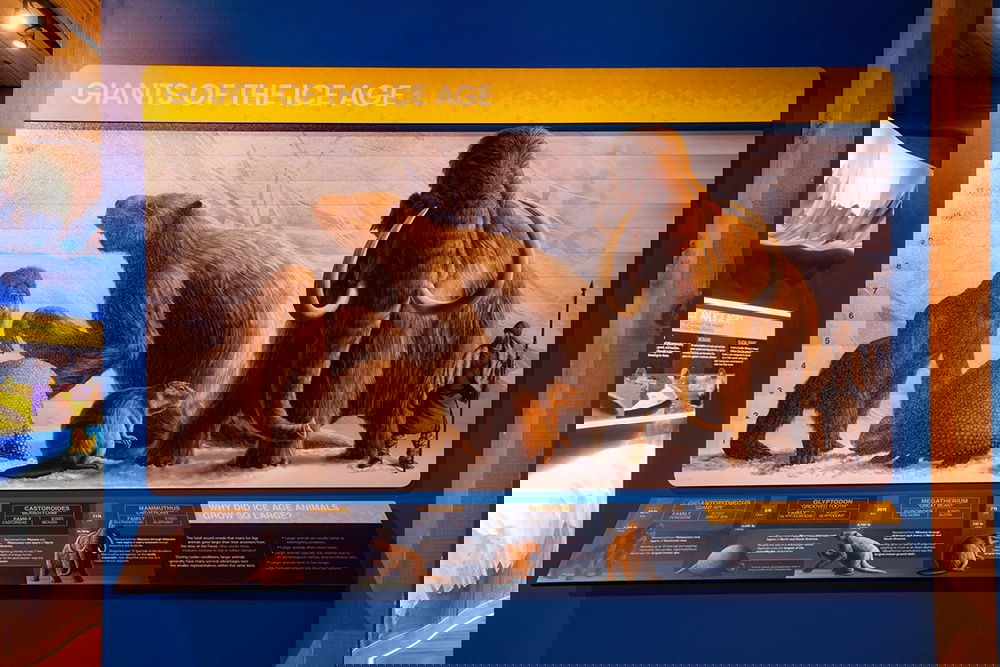
During cooler conditions, larger animals generally have many survival advantages over the smaller representatives within the same kind.
- Larger animals are usually better at intimidating predators.
- Larger animals often move faster.
- Larger animals typically stay warmer due to an advantageous surface area-to-volume ratio.
- Larger animals tend to live longer.
- Larger animals require less food per pound.
Let’s take a look at a few of these animals.
Mammuthus: “Earth Horn”
Stretching over 11 feet high at the shoulders, Mammuthus primigenius—or the woolly mammoth—was about the same size as a modern African elephant and was recovered from Miocene through Holocene rock layers on every continent except Antarctica and Australia.
- Height: 11 ft. (3 m)
- Weight: 14,700 lb. (6,670 kg)
- Family: Elephantidae
- Kind: Elephant
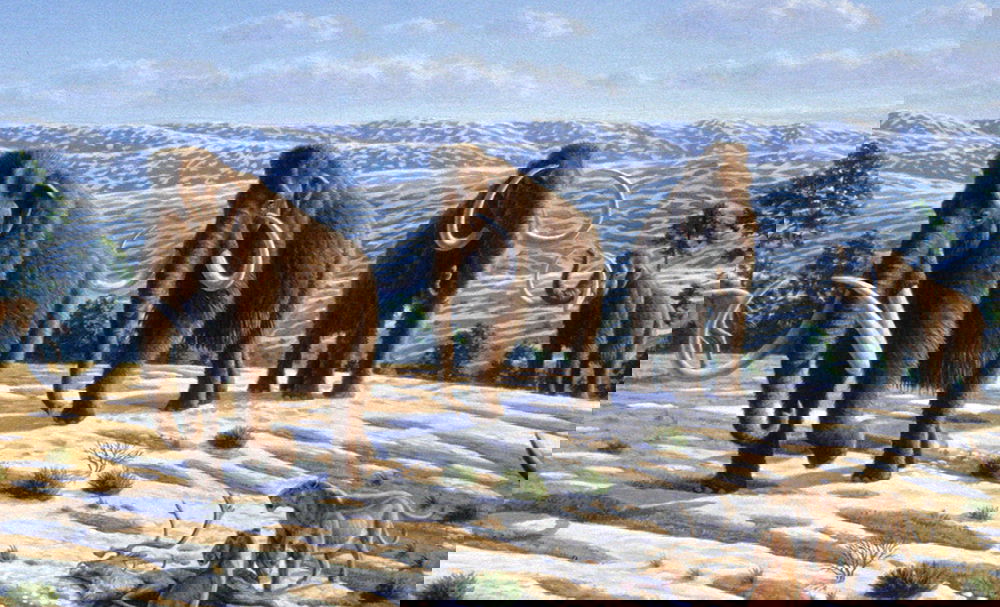
Image by Cropbot, via Wikimedia Commons. (CC BY 2.5)
Gigantopithecus: “Giant Ape”
Standing up to 10 feet tall and weighing more than two gorillas, Gigantopithecus blacki was the largest known ape and was recovered from Pleistocene rock layers of Southeast Asia.
- Height: 10 ft. (3 m)
- Weight:1,200 lb. (540 kg)
- Family: Pongidae
- Kind: Great Ape
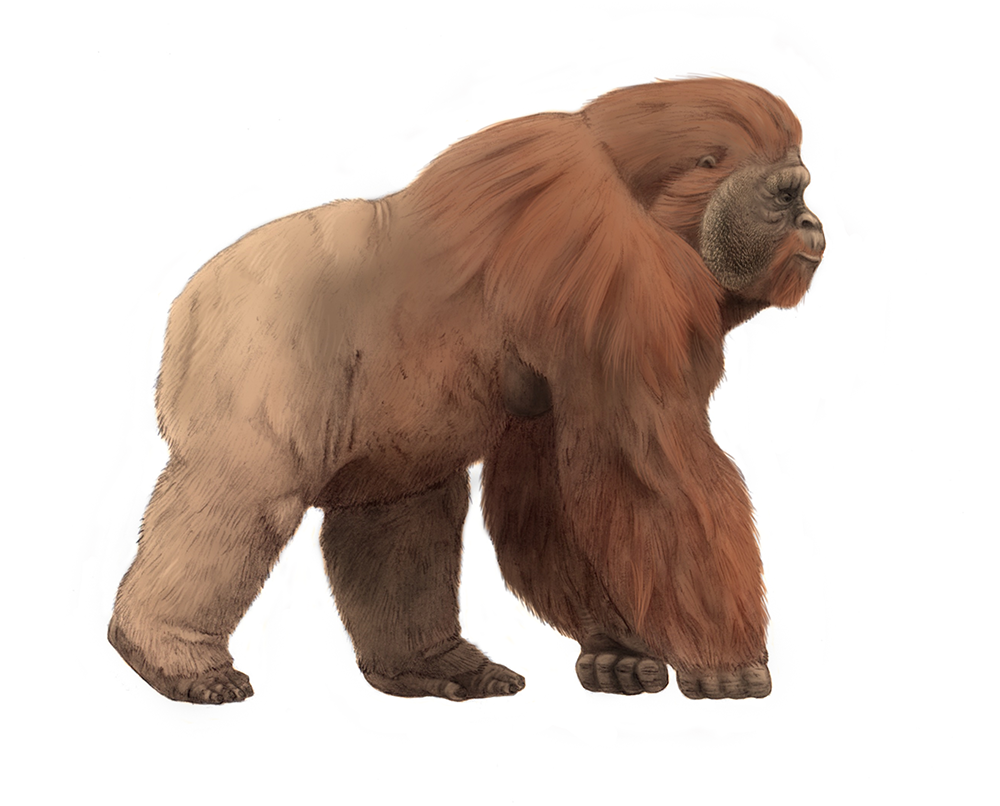
Image by Amélie, via Wikimedia Commons. (CC BY-SA 4.0)
Glyptodon: “Grooved Tooth”
Roughly the size of a Volkswagen Beetle, Glyptodon was the largest of the armadillo-like glyptodonts and was recovered from Pliocene and Holocene rock layers of North and South America.
- Height: 5 ft. (1.5 m)
- Weight: 4,400 lb. (2,000 kg)
- Family: Glyptodontidae
- Kind: Glyptodont*
*A recent analysis placed Glytodonts within a living armadillo family, Chlomyphoridae.
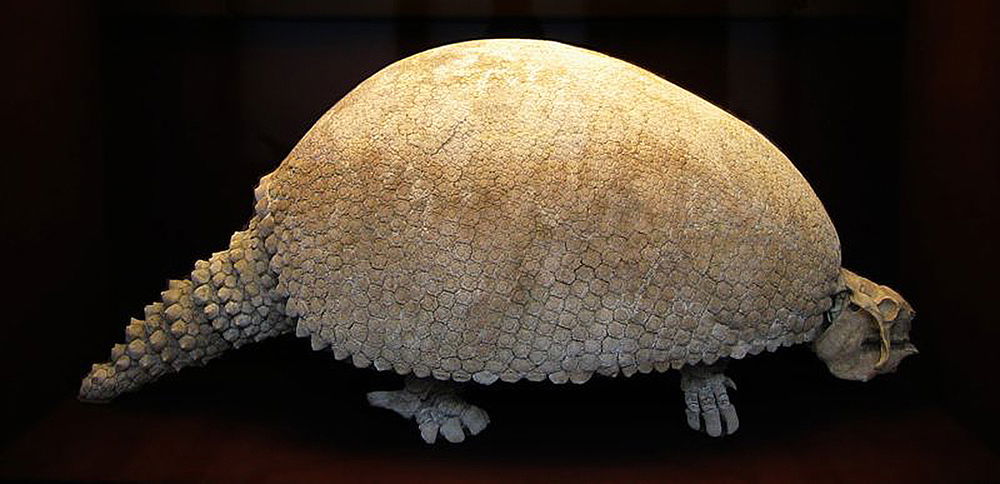
Image by WolfmanSF, via Wikimedia Commons. (CC BY-SA 3.0)
Megatherium: “Giant Beast”
Reaching up to 20 feet (6 m) in length and weighing as much as an Asian elephant, Megatherium americanum was the largest known ground sloth and was recovered from Miocene through Holocene rock layers of North and South America.
- Height: 20 ft. (6 m)
- Weight: 8,700 lb. (3,950 kg)
- Suborder: Folivora
- Kind: Sloth
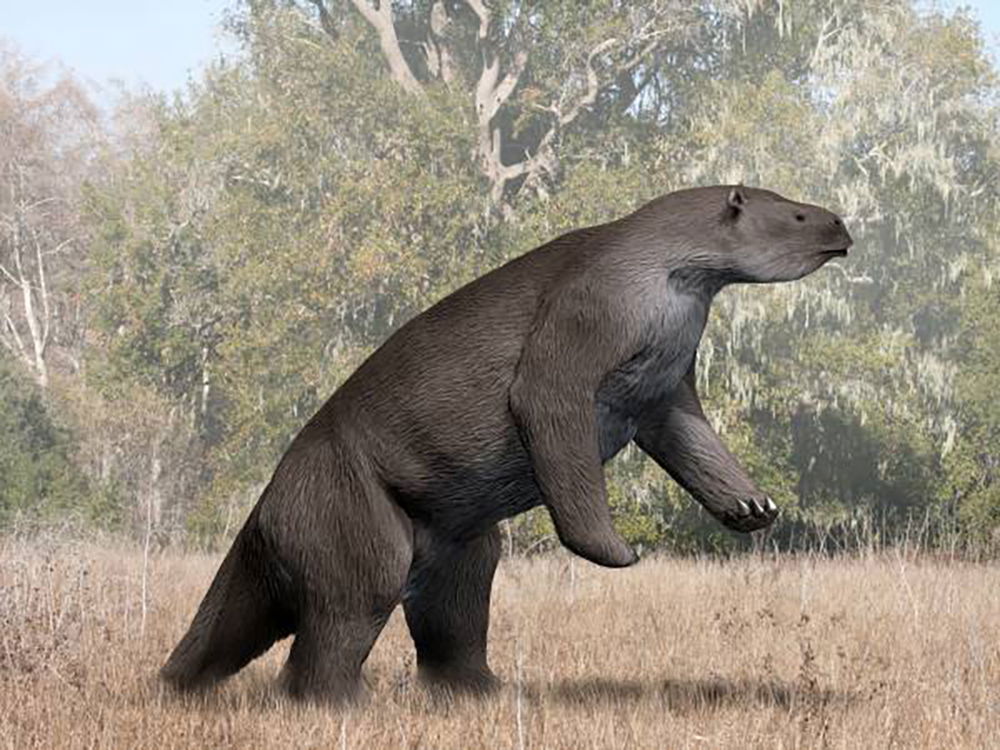
Image by NobuTamura, via Wikimedia Commons. (CC BY-SA 4.0)
Castoroides: “Beaver Form”
Attaining a length of over seven feet and the weight of a large human, Castoroides—or the giant beaver—was the largest known beaver and was recovered from Pliocene and Pleistocene rock layers of North America.
- Length: 7 ft. (2 m)
- Weight: 240 lb. (110 kg)
- Family: Castoridae
- Kind: Beaver
Image by A. C. Tatarinov, via Wikimedia Commons. (Public domain)
Start planning your visit to the Ark Encounter today, and learn more about the ice age on Deck 3 of our life-size Noah’s Ark!
Bigger Than Imagination




_-_Mauricio_Ant%C3%B3n.jpg)


Ark Encounter Location
place
1 Ark Encounter Drive
Williamstown, KY 41097 (see directions)
Just west of the intersection of KY-36 and I-75 (at exit 154).
An attraction of Answers in Genesis
2026 Answers in Genesis. All rights reserved. | Privacy Policy | Content Policy | Attraction Rules